Product Context Analyzer
Setting a new standard for LLM-based Context Discovery
Put User Research on a Fast Track
PCA transforms how organizations learn about users
SCALE UP discovery
Leverage information learned from vast amounts of documentation, workflows, domain knowledge, and usage descriptions.
REDUCE uncertainty
Generate outputs not limited to internal stakeholder opinions, existing customer relationships, or organizational assumptions.
HARMONIZE outputs
Generate contextual outputs through standardized workflows instead of inconsistent research practices and prompting techniques.
ADJUST scope
Generate explicit context first and invest research effort where uncertainty still remains.

Redefining User Research
From discrete research projects to continuous, on-demand context discovery
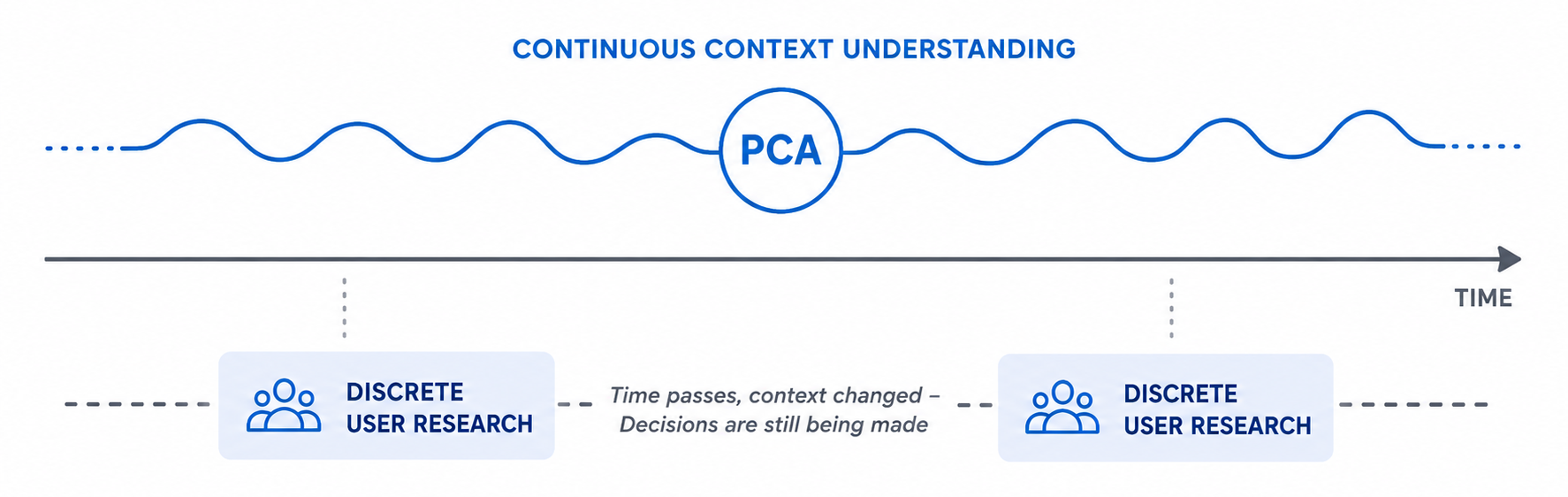
Risks of Discrete User Research
User Research can't keep up with continuous product development
Being the Bottleneck
- Demand for user insights grows faster than research capacity
- Expertise remains concentrated in a limited number of specialists
- Research struggles to support everyone who needs it
Losing Control
- User research remains fragmented across projects and methods
- Context understanding is repeatedly reconstructed for individual projects
- Knowledge becomes available episodically rather than continuously
Getting Bypassed
- Product decisions are increasingly made without sufficient user context
- Teams compensate with assumptions, stakeholder opinions, and ad-hoc AI
- Human-centeredness becomes difficult to govern across the organization
Taking Advantage of Continuous Context Discovery
On-demand LLM-based user research enables continuous understanding
Pervasive User Understanding
Make detailed user context information available to every product team as a scalable service across the organization.
User Research at AI Speed
Generate user context insights in minutes, whenever they are needed, to inform strategic or tactical product design decisions.
Stay Grounded in User Context
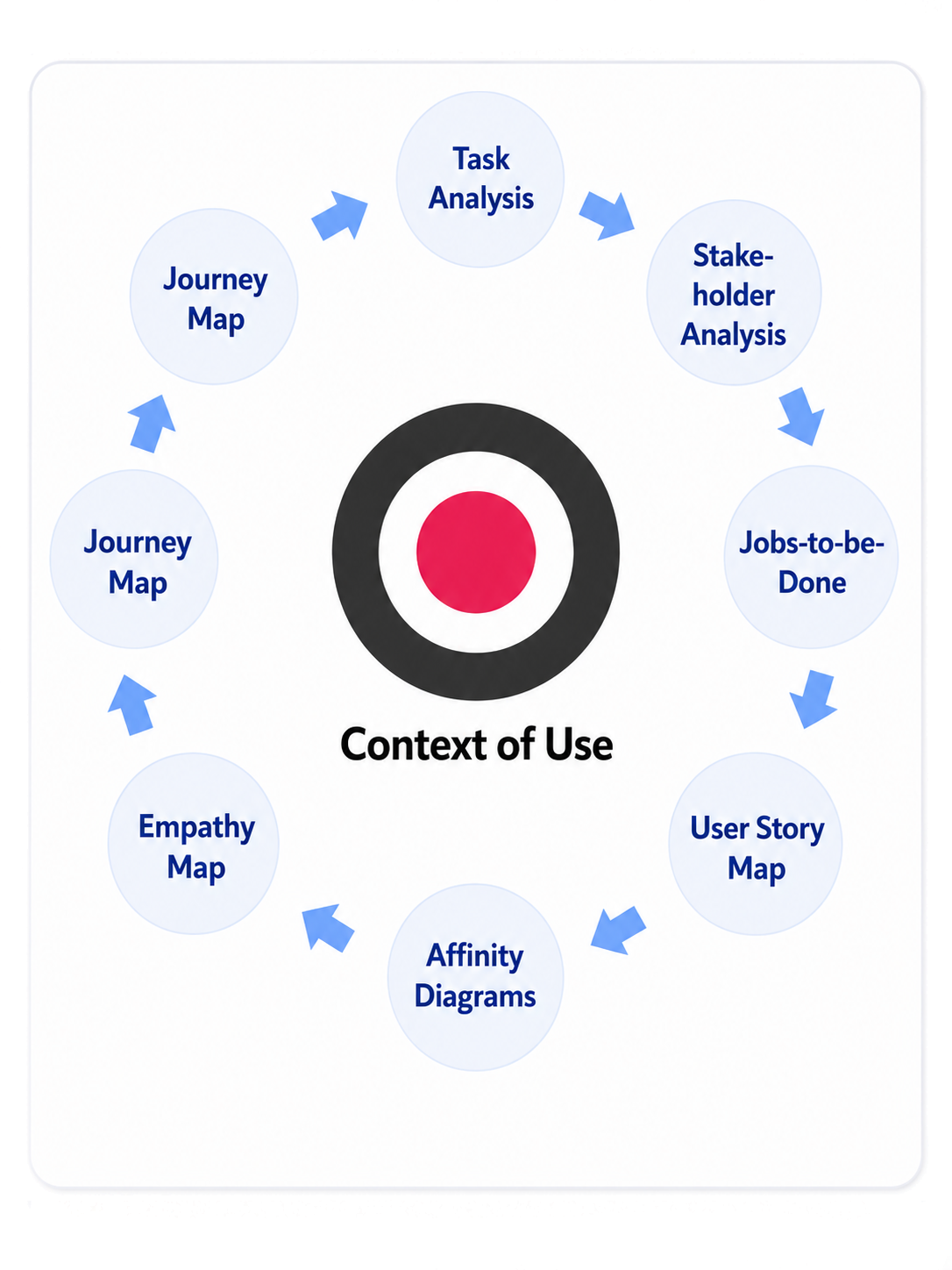
Keep user research artifacts connected to a unified human-centered context-of-use model that can feed human and AI decisions.
Enable the Entire Product Team
Turn every team member into a context-driven decision maker
As a UX Researcher
Automate fact gathering and elicitation of requirements to spend more time interpreting and sharing findings with stakeholders.
As a UX Designer
Create information architecture and workflows based on a deep understanding of your users' goals, task flows and task objects.
As a Content Writer
Align your writing with the domain-specific language and provide authentic sample scenarios that your users will understand.
As a Front End Developer
Get detailed task flows, user requirements, and narrative scenarios for your next screen to implement.
As a Business Analyst
Generate consistently written user stories along with narrative scenarios to foster a human-centered engineering culture.
As a Product Owner
Identify underserved user needs to prioritize features and plan product roadmaps that lead to meaningful solutions.
Simple to Use
From one input to professional outcomes in three easy steps
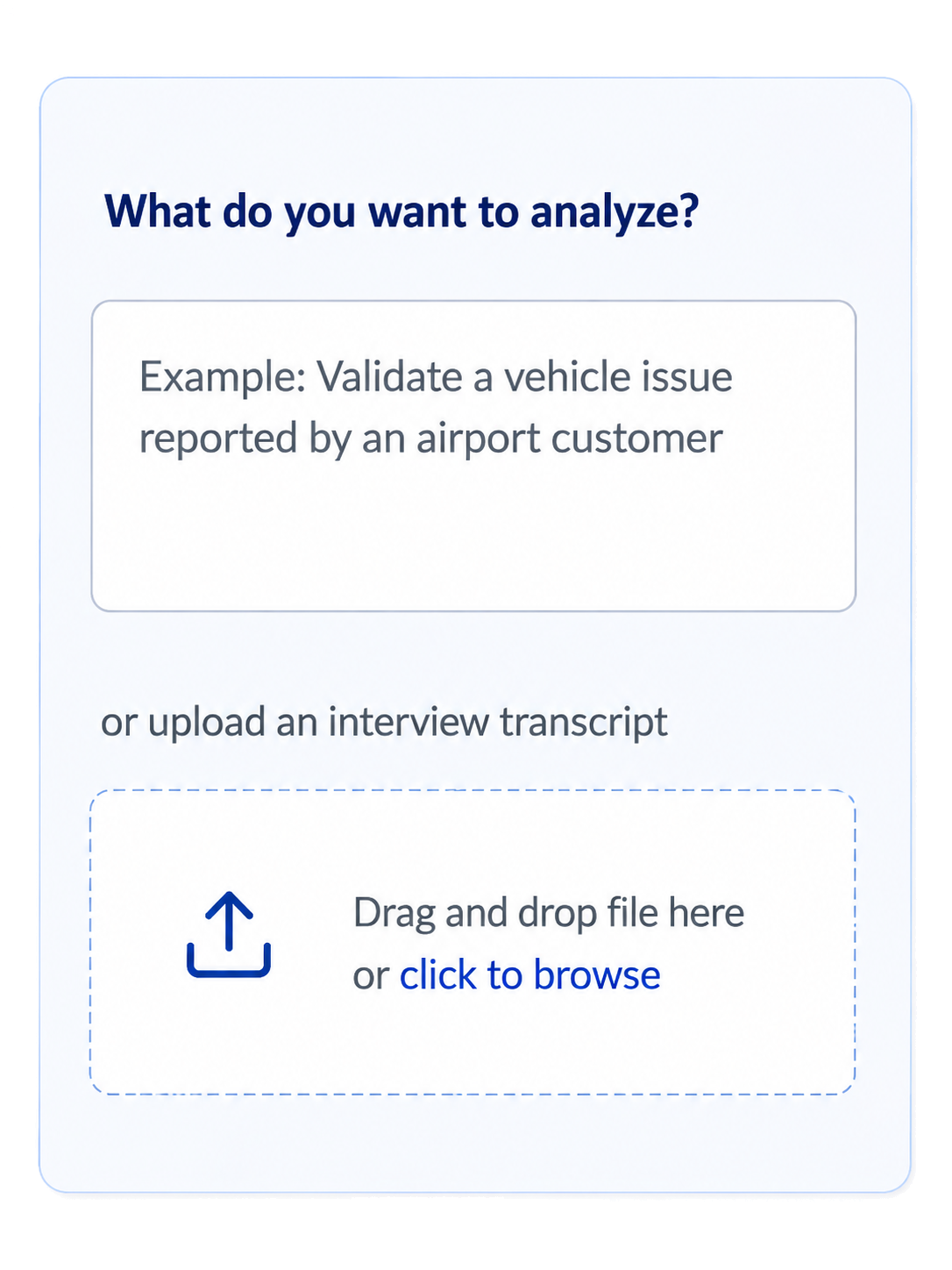
Provide Input
Enter a task, role, or context prompt or upload an interview transcript.
Discover Context
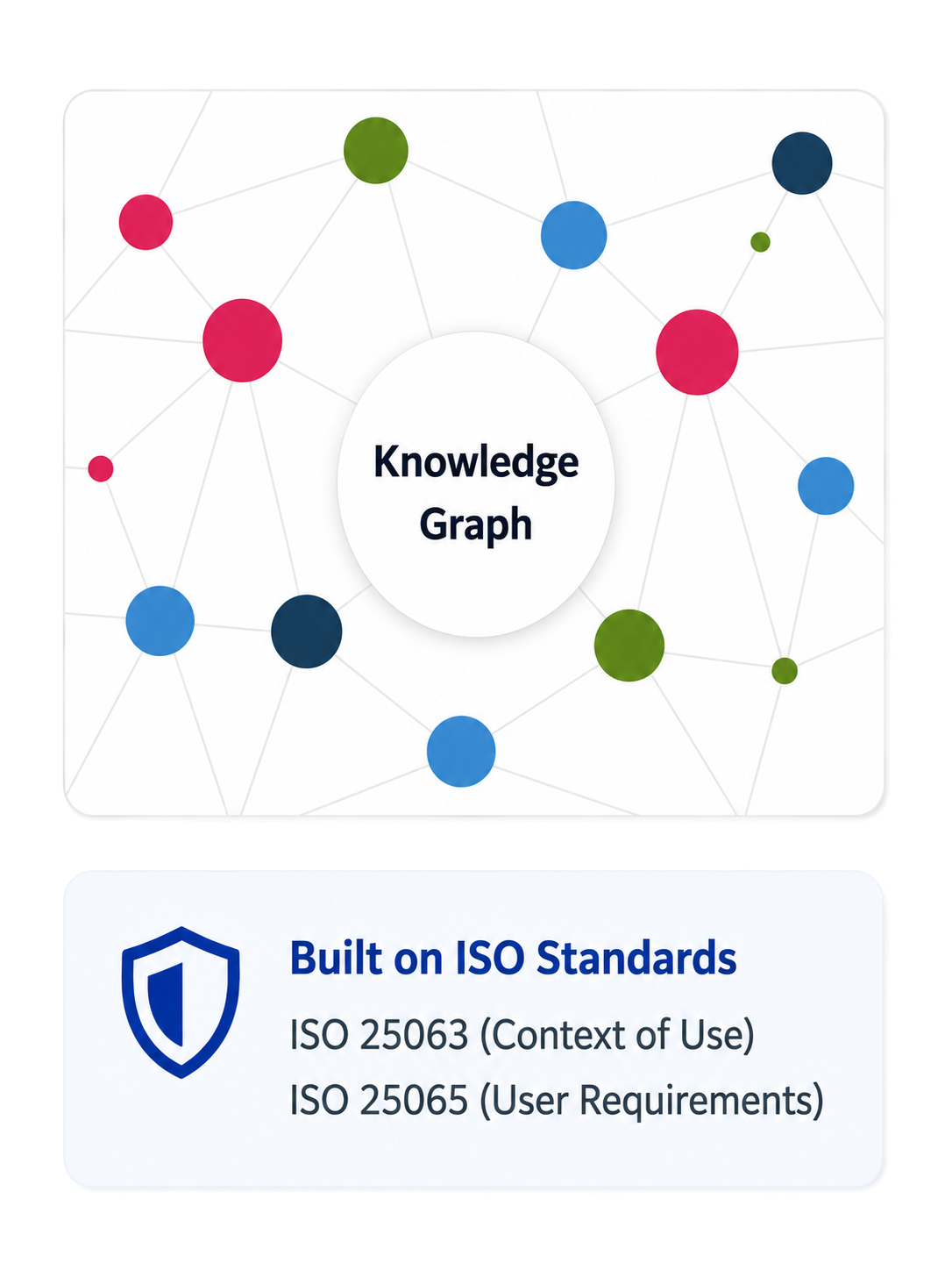
PCA constructs a connected model of the context of use from LLM data.
Get Instant Results
Explore your context model and all generated deliverables.
Start in Minutes
No extensive setup or training. Get going right away.
Automated Discovery
No prompt expertise needed. PCA systematically queries LLMs to discover user context.
Everything Connected
All deliverables link to one underlying model.
What Practitioners Say
See how professionals evaluate PCA in their own work
Put PCA to Work
See how PCA can help master your next challenge
With PCA, you can:
This will give you:
- Context-of-use descriptions making the problem space explicit
- Detailed task flows, pain points, and goals for relevant tasks
- As-is scenarios telling authentic stories about real-world practices